In this week, we explored interactive and nonlinear narratives across various media formats, emphasizing the role of digital tools in storytelling. Through the lecture and workshop, we examined how ergodic literature and cybertext redefine the reader’s role, transforming them into active participants rather than passive consumers. Aarseth (1997) describes cybertext as a "machine for the production of a variety of expressions," emphasizing its dynamic nature. Unlike conventional literature, ergodic texts require readers to navigate and shape the story’s progression.
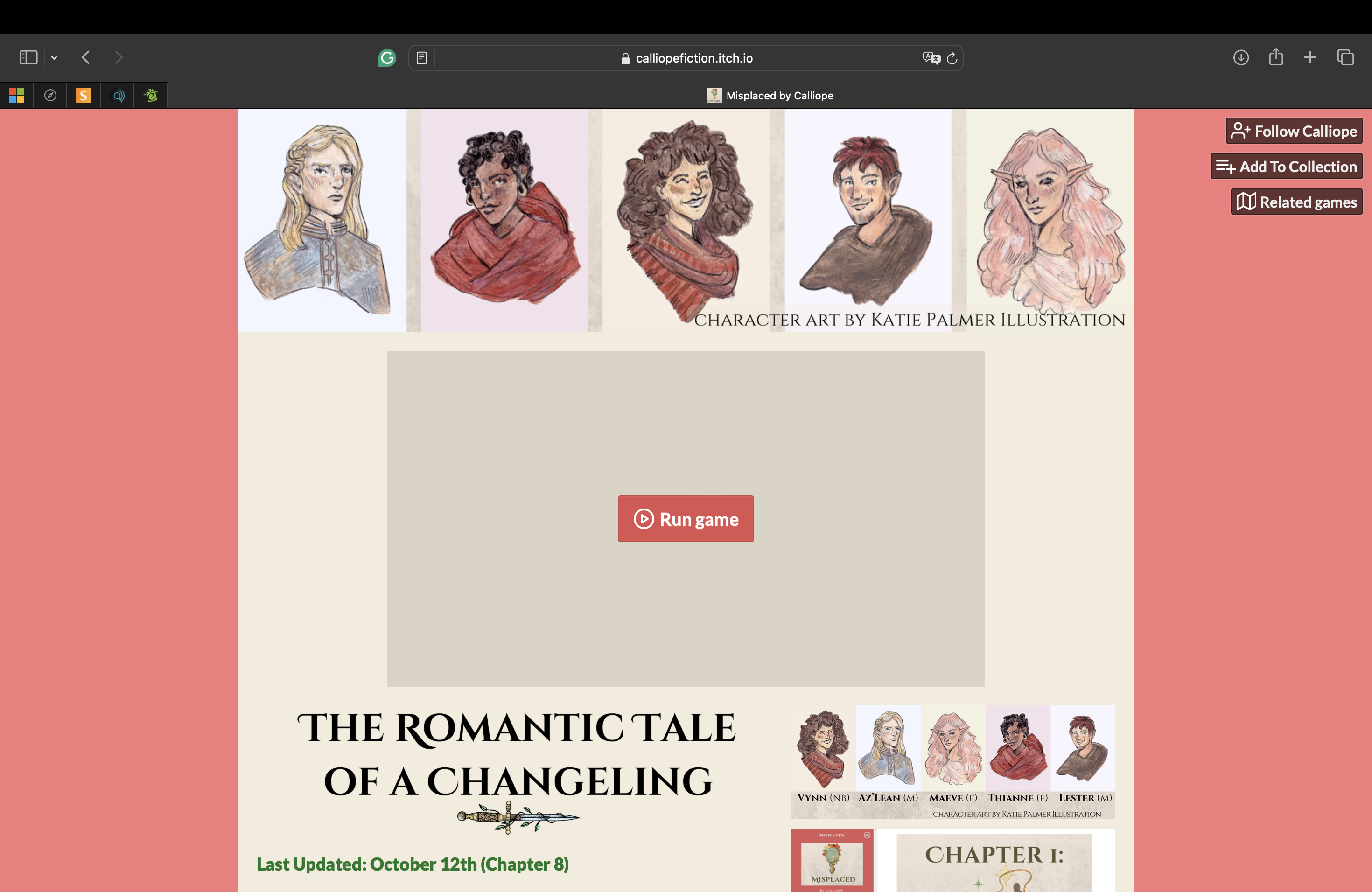
During the workshop, we engaged with interactive stories on Twine and experienced nonlinear storytelling. I first tried the game "THE ROMANTIC TALE OF A CHANGELING", however, I found that I couldn't finish this game in a short period. This is because there are many choices, and characters and the story requires time to discover and complete. Then, I tried the game "Space Frog". The multiple narrative pathways are less and I can alter the storyline based on my choices. I found this kind of interactivity enhances immersion and emotional impact.
At last, with my group member, we created our own interactive story using Twine. It's very hard because we need to incorporate multiple choices, diverse fonts, and multimedia elements. I realize the importance of structure in nonlinear narratives. I tried to come up with some ideas to attract players and surprise them. But this is hard, so we only made a simple game at last. The nonlinear structure made me reconsider traditional storytelling techniques and the complexities of designing an engaging interactive narrative.